
To begin to understand any human practice, it’s useful to imagine oneself to be an alien observing the practice for the first time.
Countries: boundaries across space that groups of people collectively hallucinate and the people or institutions within those hallucinated boundaries.
Parties: areas of spacetime in which at least three homo sapiens gather intentionally for this mysterious agenda called “fun.”
Noodles: ground up grain or rice that has been formed into symmetrical, skinny forms which are designed specifically to be snapped easily before being boiled and nearly impossible to eat with a fork after-the-fact, for reasons that have nothing to do with nutritional value.
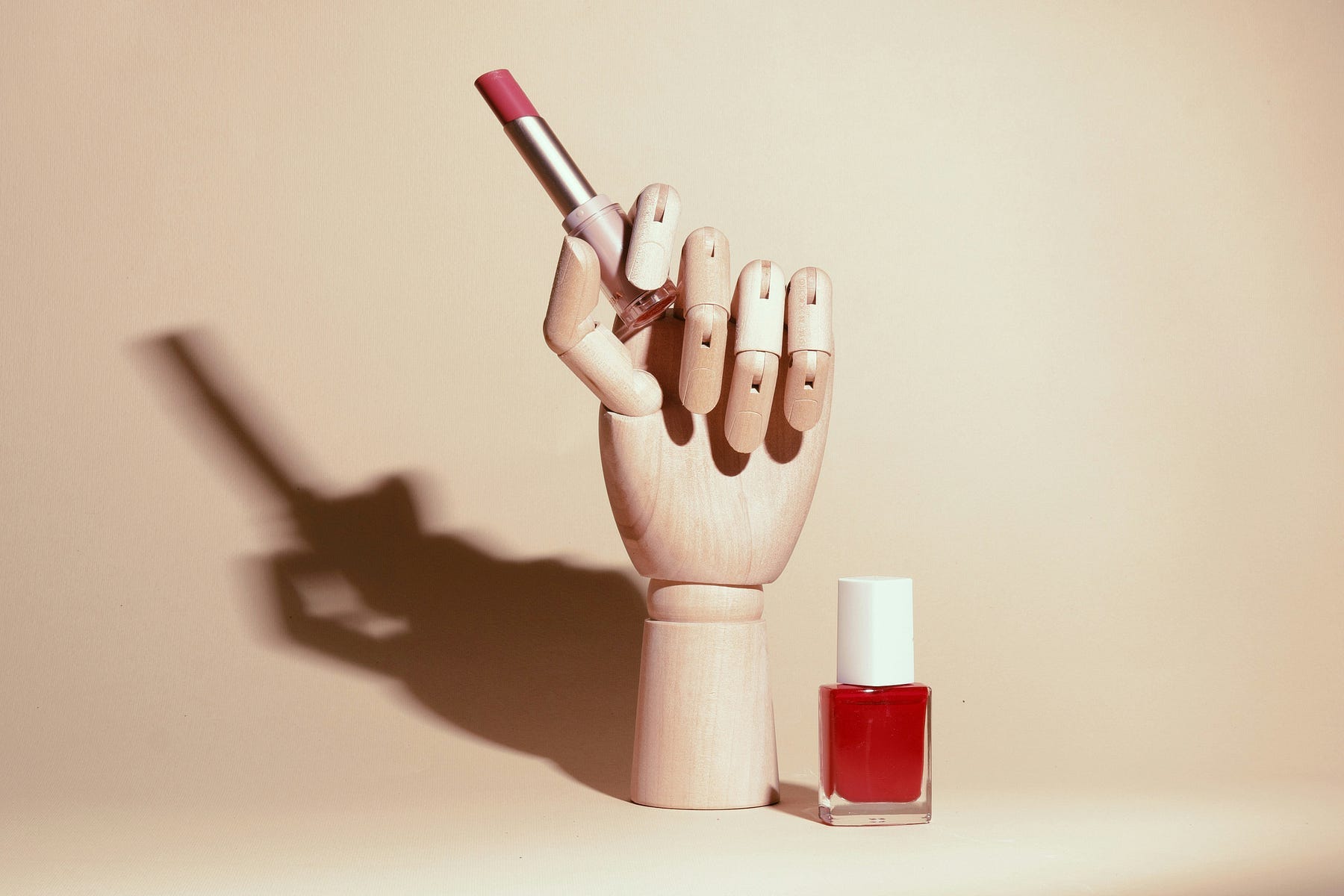
Makeup. When I put on a bit of makeup for the first time in a decade a few months ago, I felt like an alien. I’d forgotten that a significant percentage of women adorn their face in myriad powders and gels either daily, regularly, or on special occasions — for the sake of altering their likeness. This fact felt newly bewildering; I’d nearly forgotten about makeup for the decade I wasn’t wearing it. For the sake of understanding, bewilderment is the beginning.
In explanations of makeup use, convenient non-answers are frequently provided. People say, “enhance your natural features,” in a breathy way that makes coloring in your face seem natural, like walking or eating. Women oftentimes say, “I do it for myself,” in response to the accusation that they are attempting to be more attractive, or to otherwise give a different impression to others than their plain face would. I find this response to be uncompelling — mostly because I suspect that human beings hardly ever do anything solely for themselves. We are a hyper-social species. Without other human beings, I would stop doing entirely. How can we do a thing only for ourselves?
The prospect of putting on makeup for oneself is more bewildering than doing most things for oneself, for one glaring reason: while going through life, we, for the most part, cannot see our own faces.
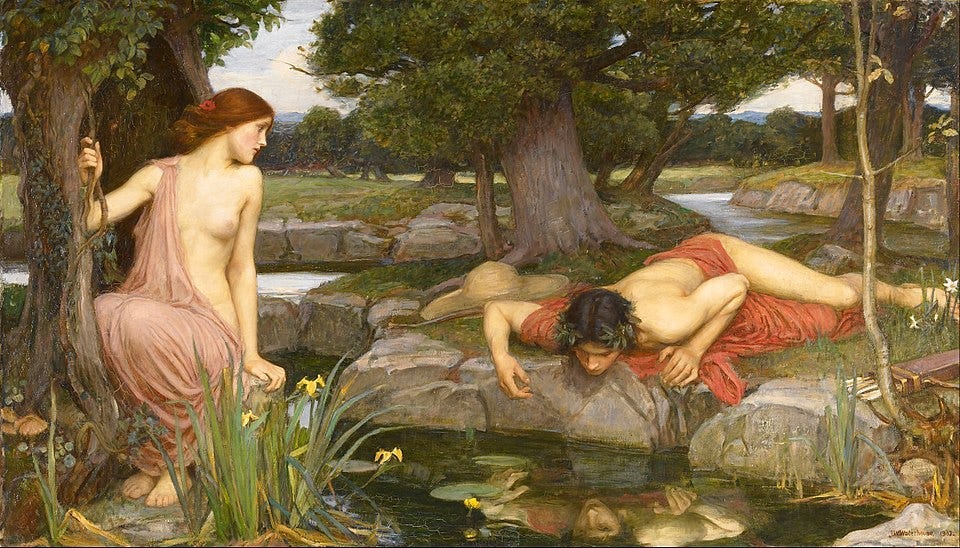

Narcissus stared in a pool all day, but he drowned. Most of us have to swim, and we kill the mirror surface with our movement. So, if the experience of beauty were desired, it would be best to go to an art museum or a forest. If creative generativity were desired, it would be best to paint a picture, write a poem, build a sculpture, etc.
Creativity lies on a spectrum. Elaborate, novel face paint is incredibly creative. It’s no less creative than any art. Conversely, “no-makeup makeup,” is quite constrained and non-expressive, despite taking impressive technical skill. Choosing an eyeshadow color is a little micro-jolt of agency akin to picking a shirt. It might give someone a bit of confidence in their ability to choose for the remainder of the day, but it hardly compares to composing a symphony. At best, creativity is only part of the explanation for daily makeup wear.
Unless we do actually plan to stare in a mirror all day, the remaining explanations for make-up use involve, in one way or another, the gaze of a secondary being. The gaze needn’t come from a man. The gaze needn’t be about sex. The gaze might even be envisioned.
Internalized Gaze
Someone may feel and act differently because they imagine some hypothetical person will believe they look better.
One variant of this hypothetical person is the internalized male gaze. Women are frequently conditioned to imagine themselves from the outside rather than experience life directly. To wear makeup might feel pleasant to someone conditioned in this way because her internalized external judge approves of how she imagines she appears, going about. We are intelligent, imaginative beings who perceive the invisible, after all. The stories that hold up our self-esteem are not directly seen.
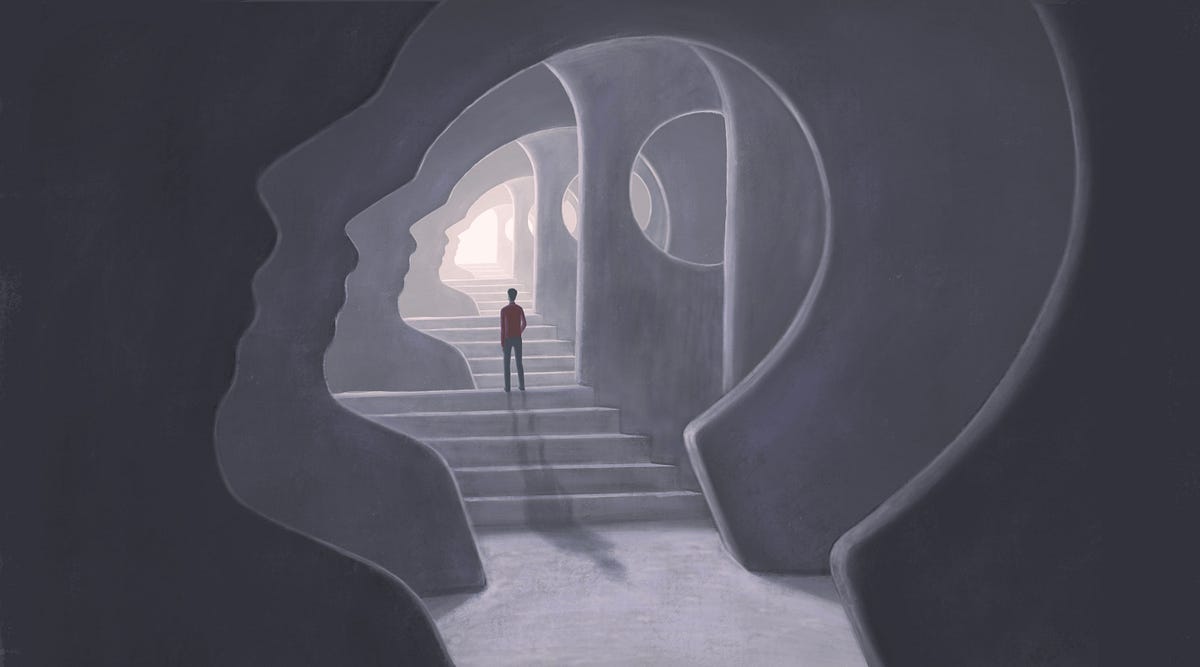
Perhaps this is why makeup-wear can impact the psychological state of individuals independently of an actual audience. Consider the confidence boost human beings can derive from cosmetics. Confidence can, in turn, improve performance, potentially generating a virtuous loop. In one study from 2016, participants who were instructed to apply makeup performed better on a test than participants who listened to positive music or applied face paint. The mechanism, presumably, is that makeup increases global self-esteem, and global self-esteem improves performance.
This might seem simple enough, but I’d like to invite a socially-aware analysis. Why should applying makeup, which is known to be temporary, improve global self-esteem? The makeup is, quite literally, skin deep. There is no direct causal pathway for the makeup to change anything about the personality or the intellect. The explanation, then, likely hinges on the envisioned, internal gaze. For at least some percentage of the population, global self-esteem seems to depend on how pleasing an individual imagines they look in the present moment.
If someone’s self-esteem did not rest on appearance at all — as the body neutrality movement advocates — potential mechanisms for increased confidence with makeup wear becomes somewhat scarce. Given this, I believe we should see the impacts of makeup on performance not as absolute but as socially contingent.
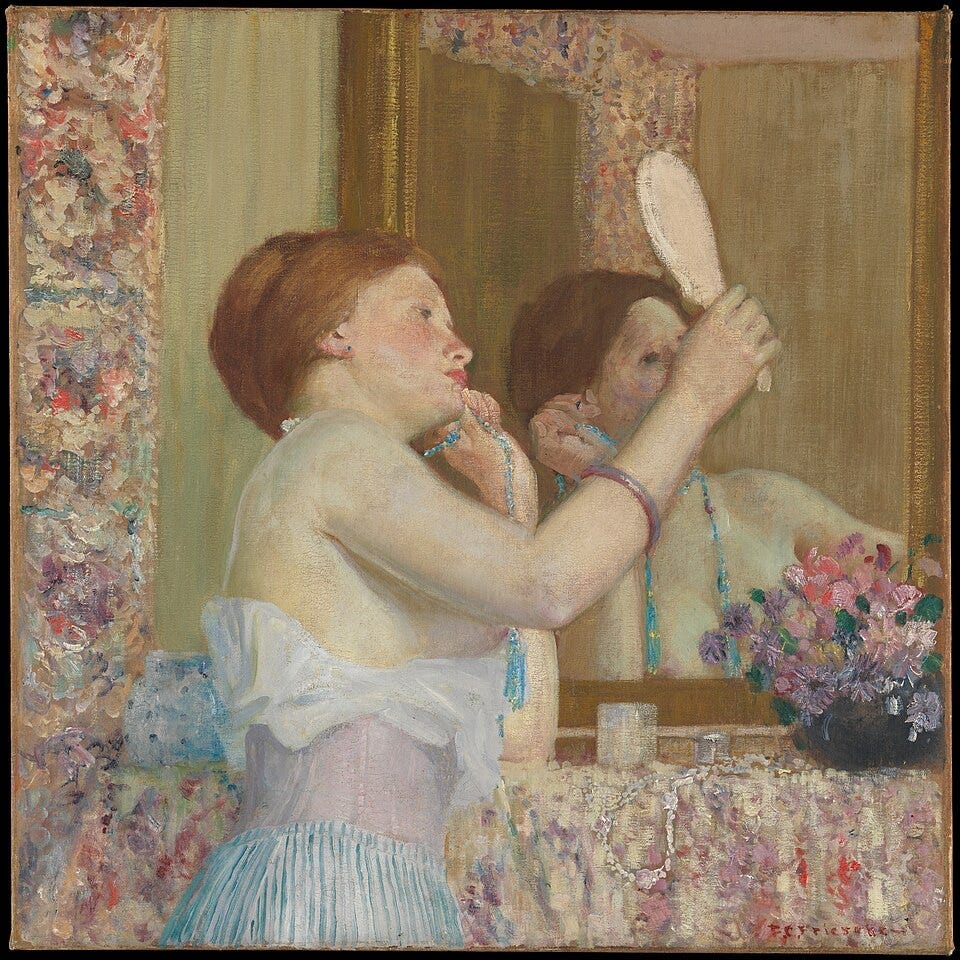

If women frequently equate their worth with their subjective degree of beauty, we should expect the confidence boost from makeup to be stronger. I do not wish to be reductive; bright red lipstick might signal boldness, and boldness might increase confidence. But it does seem as though the importance we place on beauty in women (arguably, a patriarchal construct) is a crucial step in the causal nexus that allows women to improve their academic performance via makeup wear.
Empowered or not, it’s an uncanny valley variant of bootstrapping. In a sense, it’s brilliant.
Intersubjectivity
Actual human beings are relevant, too. Suppose that makeup is successful. Suppose the changed likeness the makeup produces changes the impression of some secondary being; the makeup wearer is seen as more attractive, more trustworthy, more competent, more sociosexual, more prestigious (by men), more dominant (by women), less approachable, or more approachable than they otherwise would have been, depending on style. This does happen. In these cases, the makeup-wearer may be treated differently. This changed treatment may alter the makeup-wearer’s experience of life.
In this sense, dressing for the perception of others can be for oneself, nontrivially. Someone who is frequently approached might gain more social experience, for example. Appearance can influence income, income can alter personality, etc. It is sad that qualities like weight, appearance, gender, and race can impact employment or social outcomes; this goes against meritocratic ideals. But, in practice, they tend to.

This is where intersubjectivity comes in. When people — men, women, folks of all kinds — wear makeup, I argue it’s almost never true that they do it entirely for themselves or entirely for some other. When a person is perceived differently, for any reason, it tends to impact that person’s direct experience of life. We do not navigate a fixed, perception-devoid space. Rather, we navigate the variable, perception-sensitive world of other human beings. We point, we speak, we label, and continually see differently due to each other.
Clothing and makeup can become a kind of language. In Dressed: A Philosophy of Clothes, Shahidha Bari discusses the poetics of clothes. Purses hold mystery. Dresses both reveal and contain, selectively. Jackets carry indicators of socioeconomic position.
Similar commentary can be made of various makeup styles. Blue lipstick signals a willingness to be unconventional. Pink might evoke gentleness, and orange, happiness. In Ancient Egypt, a clean, black cat-eye indicated status on both men and women. In many cultures, specific tribal markers show group belonging. Among Hindus, Jains and Buddhists, a red dot between the eyebrows on the forehead — called a Bindi — represents the universe, among a complex matrix of other things.
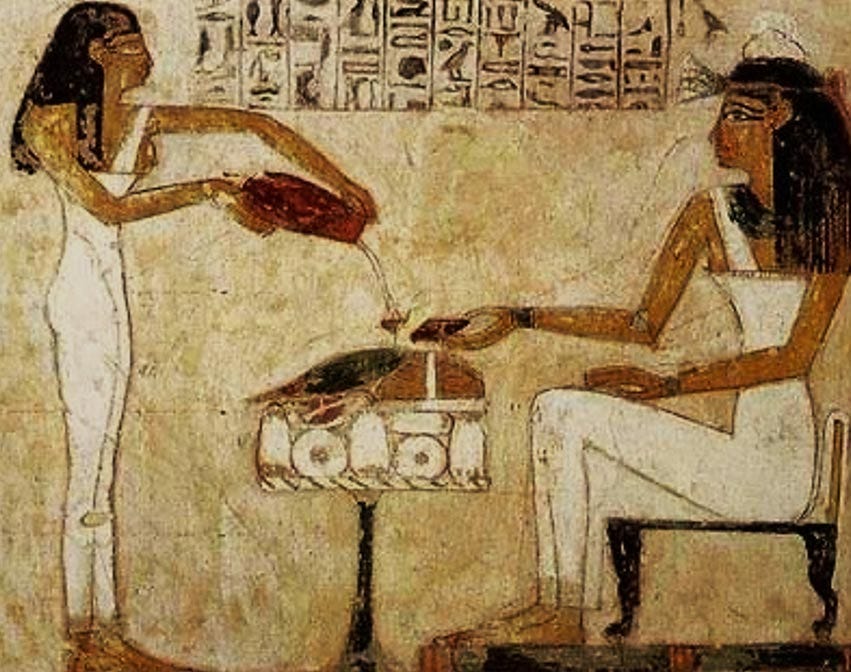

The history of makeup demonstrates its seeming inconsistency. Consistently, it’s biologically-inspired. At the same time, it’s socially constructed, utterly.
Makeup is biologically-inspired in the sense that the most common makeup emphasizes female secondary sex characteristics: higher contrast between skin and eyes, fatter lips, etc. This exaggeration of biological traits underpins the effectiveness of practices like applying lipstick and mascara. Higher facial contrast, which standard makeup provides, is associated with youth. Increased contrast is extreme in traditional Geisha attire, in which dark red lipstick is applied over white face powder. To a less extreme degree, most makeup practices across cultures increase overall facial contrast, outline eyes, and emphasize lips.
At the same time, specific makeup styles are particular to an individual, culture, time, status, and place. We invent the makeup. Groups of people produce it. People teach it to each other. Whether and how it is worn varies by geographic region. Human beings use it — intentionally or otherwise— to signal status, personality, occupation, gender identity, and belief.
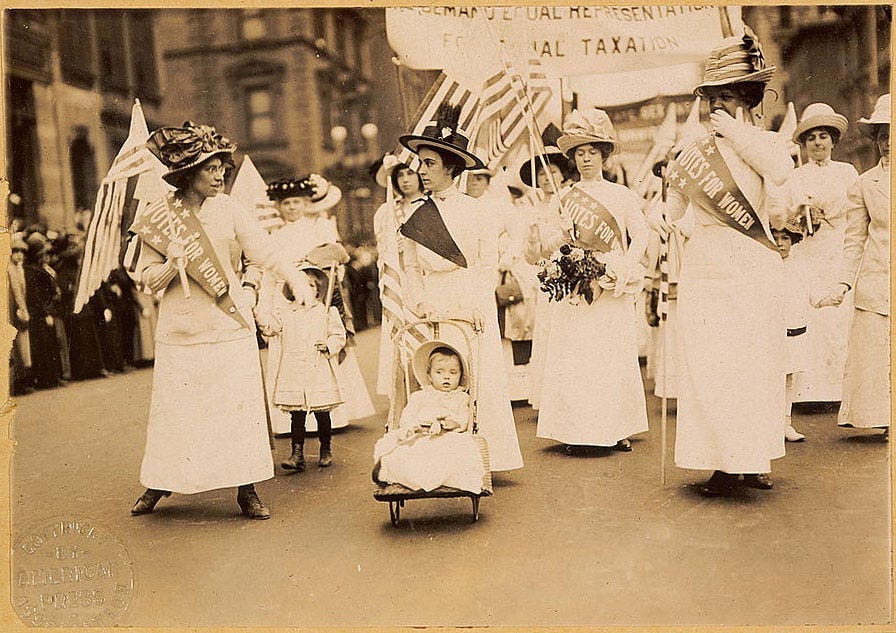
In the 1910s, suffragettes wore red lipstick as a sign of rebellion. At the time, red lips were deemed illicit and unladylike. Feminists used these pre-existent connotations to engineer a new meaning.

Nietzsche, Butler, and Performativity
The idea of makeup soaks into our concepts of gender — and not always for good. Some misogynists see the likes of makeup and seem to not distinguish between pieces of attire and the human beings who wear them. They call women “shallow” and “manipulative.” This complaint is not new. Famously, Friedrich Nietzsche published the following passage in Beyond Good and Evil, among many other, similar quips:
What is truth to a woman! From the very first nothing has been more alien, repugnant, inimical to woman than truth — her great art is the lie, her supreme concern is appearance and beauty.
As a thinker, I quite like Nietzsche. But, unfortunately, our beloved friend Friedrich appears to hate women. He has quite a few brethren in this sentiment. Aristotle called women passive. Kant believed women were driven by a “beautiful understanding.” I’m sure men on the internet express similar sentiments in the modern day.
There is a sense in which they are right. As Judith Butler famously argued, gender itself is constituted by habitual and socially constrained performativity. By Butler, daily makeup doesn’t merely express gender; it is part of what it means to enact gender, which they deem to be a thing that is done rather than a state of being. At the current time, I don’t fully endorse their theory. But in the least, gender has performative components. The act of repeatedly applying lipstick may generate identity, even as it expresses it, from how the habit of self is altered by the lipstick’s influence on social perception and treatment.
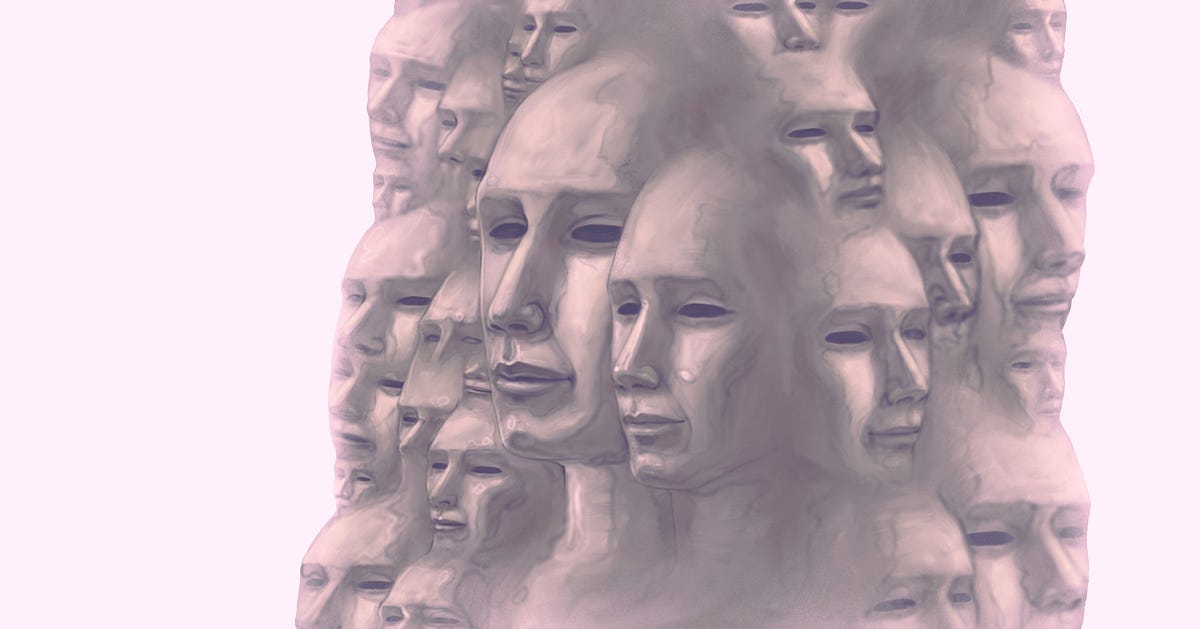
Social perception and self concept are deeply entwined. A prevalent kind of relation between the two involves the social categories we imagine ourselves and others to belong within: mother, father, woman, man, friend, employee, boss, etc. Among many other things, the concept of womanhood is associated with aesthetic performance. Sadly, time taken engaging in aesthetic performance is time not taken engaging in other pursuits. Less time commitment can amount to a genuine diminishment of capacity.
This is what Nietzsche was likely responding to. He saw the performance. He didn’t appreciate the circumstance. He didn’t see how the women he saw were acting in response to punishments and rewards from their social world, as does everyone.
Concluding Thoughts
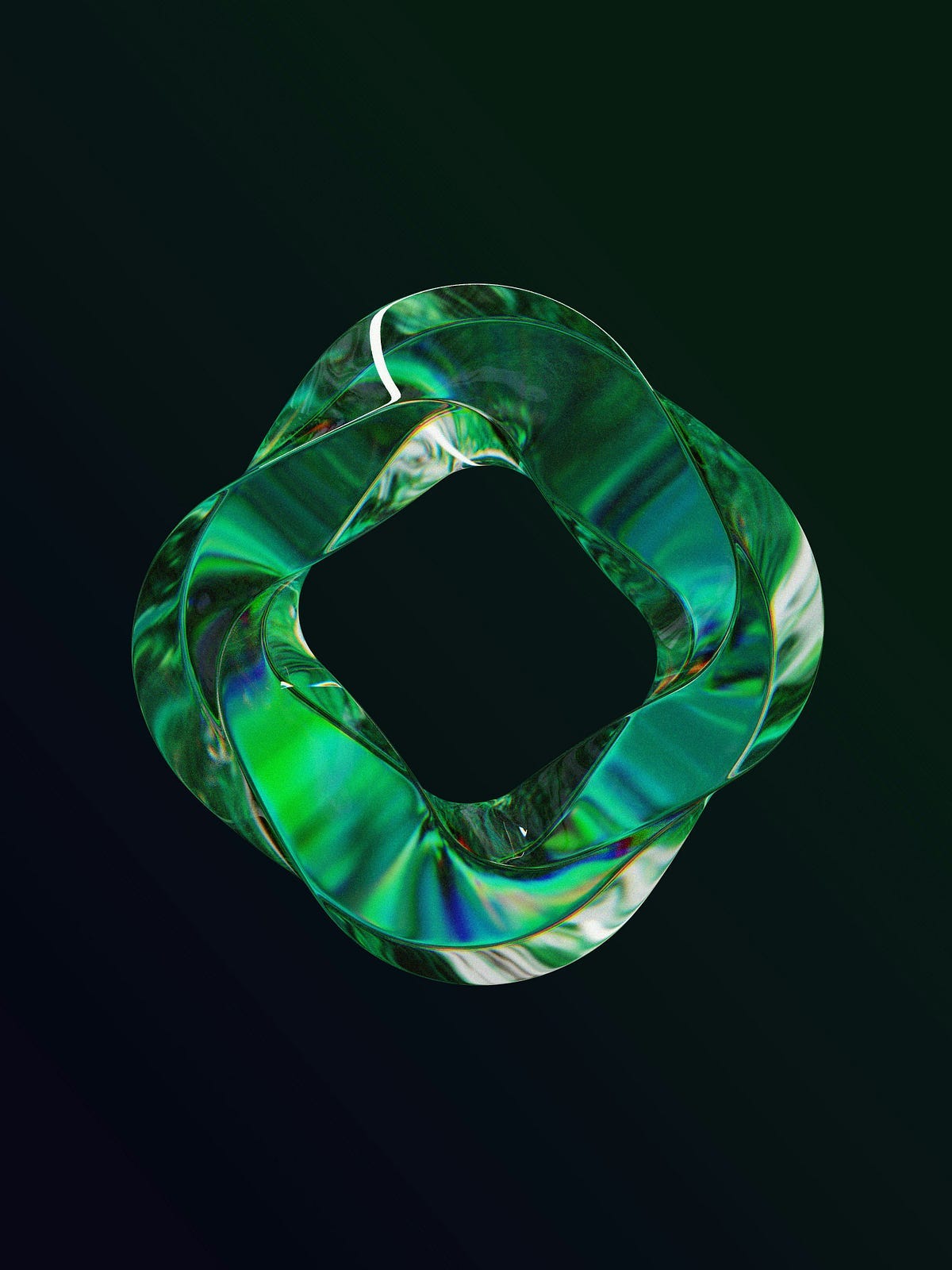
We find ourselves with a somewhat sour picture. There is genuine incentive for women to engage in time-consuming aesthetic practices for varying types of social gain. But when individuals act on these incentives, they risk condemnations of frivolity from those who have not noticed that the shallow and the deep are impossible to unlace. The skin-deep is absorbed, and the internal creeps into surface-level expression, not unlike the twin sides of a Möbius strip.
I’m not saying anything particularly new. It’s the classic “damned if you do damned if you don’t” double-whammy feminists are quite familiar with. It’s sad, possibly oppressive, and also lovely, in the sense that things which might have been originally used to amplify biological signals can be hijacked by individuals to express their particularity. Recall the feminist use of red lipstick, and the deep religious connotations of the Bindi.
In many cases, the positive and negative valences present in aspects of a system do not cancel out. I take the system of beauty labor to be one such situation, and so lack a bold moral thesis.
But actions can indicate attitude, and I admit I’ve started to wear a little bit of makeup, occasionally. It’s not a solitary behavior. It’s a kind of advertising, which, in my case, signals: “I’m willing to be noticed, I’m willing to be observed, I’m willing to be seen, and you might know me.”